misted and failed rooflights · bournemouth and 30 miles round
misted and failed rooflight replacement in bournemouth
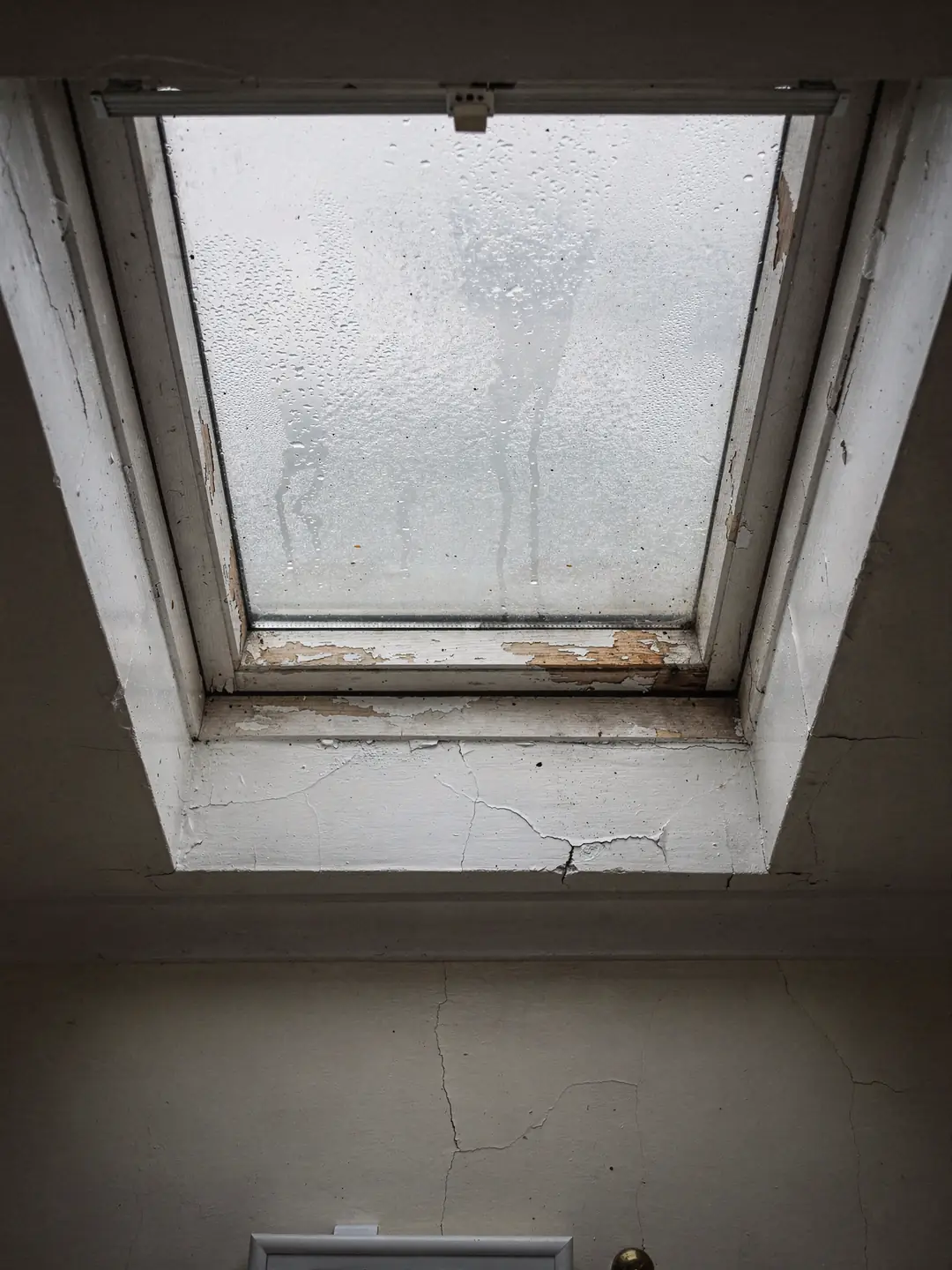
Fogged glass, blown units and rooflights past their best, replaced with new sealed glass or a complete new unit, sized from the frame and opening taken off your own roof. The survey and the written quote are free.
- Glassa new sealed unit, if the frame is sound
- Frameor the whole rooflight, if it is not
- Sizeread from the unit already in the roof
- 2.2W/m²K, the Part L limit for a new rooflight
before a replacement is ordered
the readings that size a replacement
Glass unit size
The sealed unit is measured across its width and height, and its thickness is taken from the edge, so a new unit drops into the same rebate. The old unit's markings are read where they can be found.
Frame condition
Timber, aluminium or PVC is checked for soft spots, twist, corroded corners and gaps at the beading. A frame that has moved will not hold a new unit square.
Pitch and rafters
If the whole rooflight is to be swapped, we take the slope, the rafter centres and the width of the opening, because a new unit has to match them or the opening has to be altered.
glass only, or the whole unit
the replacements we fit
-
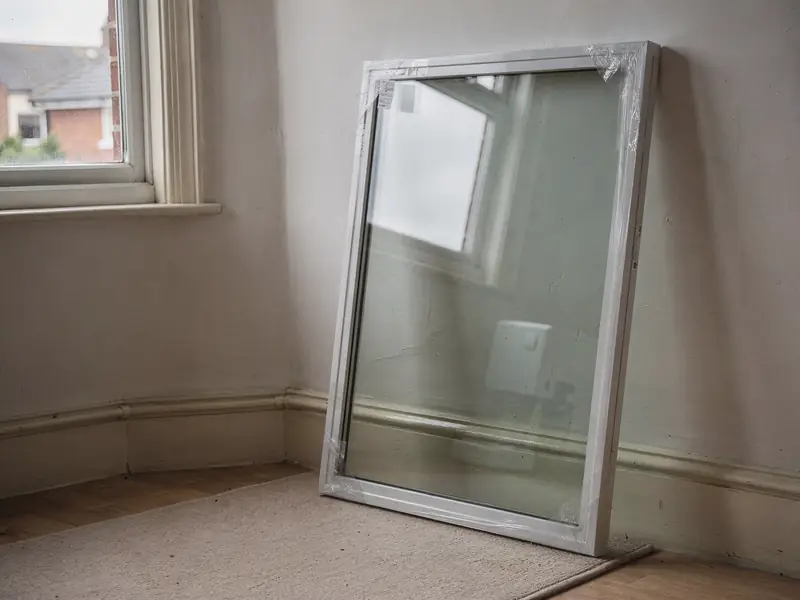
New sealed glass unit
- Made to the size of the unit taken out
- Coated glass and a warm edge spacer
- Fitted into the frame you already have
-
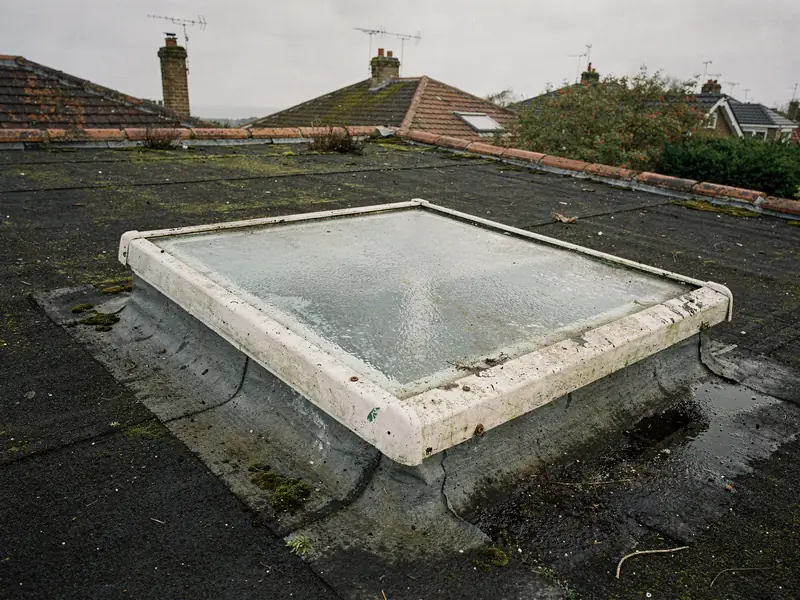
Whole rooflight, before
- Frame, glass and flashing taken out together
- Needed when the frame itself has failed
- Opening measured again before a new one is ordered
-

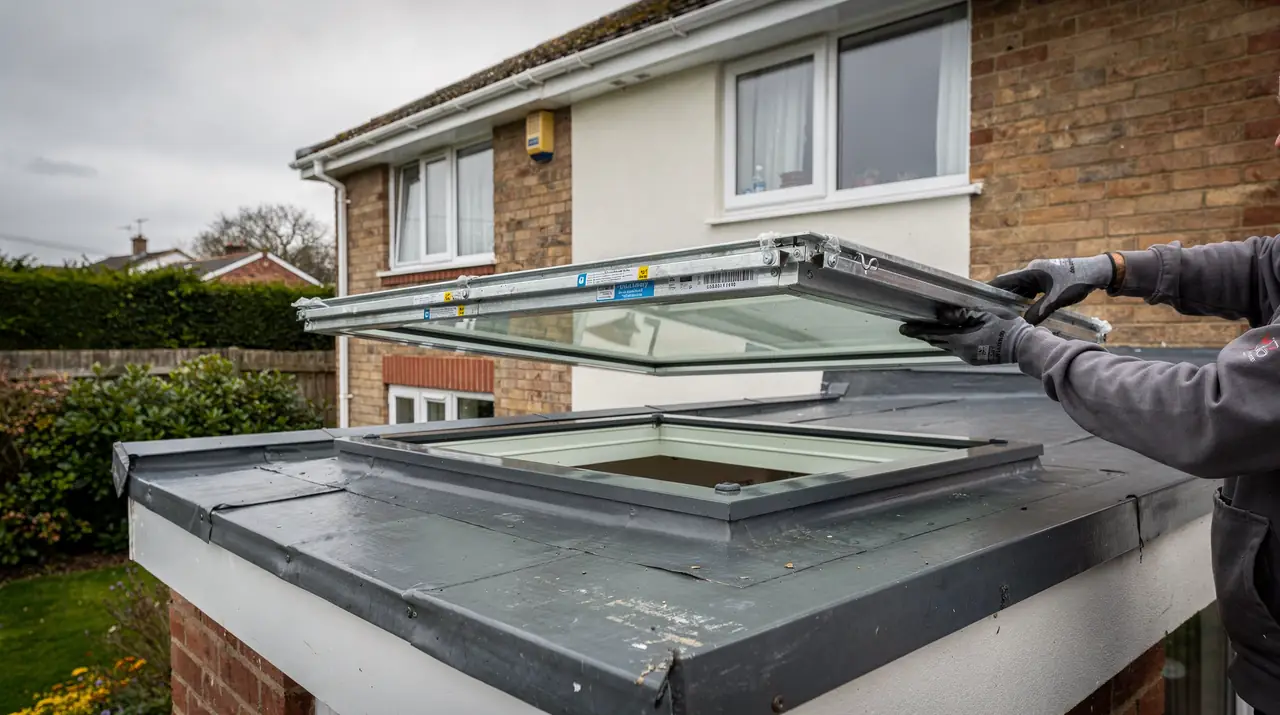
Whole rooflight, after
- New unit rated for the slope of the roof
- Flashing renewed to match the roof covering
- Inside lining made good around the opening
How a misted rooflight job runs
Survey on the roof
Up on the roof we read the glass, the frame and the opening, judge whether new glass will do, and put each figure on your survey sheet.
Glass or unit ordered
The maker builds the new sealed unit or the whole rooflight to the sizes from your roof, with the glazing you chose.
Fitted and made good
The old glass or frame comes out, the new one goes in and is sealed, the inside is finished and any notification is made.
the replacement long read
misted rooflights, from first haze to new glass
How a sealed unit fails, how to tell new glass from a new rooflight, how a replacement is sized, what the glazing must reach, which permissions apply and what fitting day involves. Six chapters, each built around a measurement.
chapter 01 · the failed seal
2panes, 1 seal
Myth
A misted rooflight needs the whole rooflight taking out.
Fog between the panes sounds like a problem with the whole rooflight, so many people assume the frame, flashing and glass all have to go.
Fact
Fog is a glass problem first.
The sealed unit is a separate component. When the frame is sound, a new unit goes into it and the roof covering, flashing and ceiling lining are left as they are.
- sealed with
- edge seal
- gap holds
- dry air or gas
- fogging means
- seal has failed
- the frame
- may be fine
A double glazed unit is two panes held apart by a spacer and sealed round the edge. Fog between the panes means that seal has let moist air in.
Fog between the panes and what has gone wrong inside the unit
A misted rooflight has a failed edge seal. The glass itself is usually sound, and the frame around it may be too.
A sealed glazing unit is two sheets of glass separated by a spacer bar that runs round the edge. The gap between them is filled with dry air or an inert gas, and the spacer contains a drying agent that keeps the gap clear. A sealant bonds the glass to the spacer on both faces. As long as that seal holds, the gap stays dry and the glass looks clear. Once the seal opens, moist air moves in, the drying agent fills up, and water vapour condenses on the cooler inner faces of the glass. The result is the grey haze, or the droplets and watermarks, that you see between the panes.
The seal is the weak point because it is the part exposed to the most strain. A rooflight faces the sky, so its glass swings between hot and cold more sharply than a window in a wall, and the unit flexes slightly as it does. Water can also sit on the lower edge of a sloping pane, soaking into the seal. Over the years the sealant hardens and a hairline gap appears. You cannot clean the haze away, because it is between the panes, and wiping the outside does nothing to it.
Haze, streaks and droplets
Age is only one factor. A unit in a sheltered position can stay clear for a long time, while one in a spot where water lies on the lower edge may fog much sooner. A poor installation shortens the life too: if the frame was fitted out of square, or the unit sat on the wrong packers, the glass carries load it was never meant to and the edge seal is the first part to give. When we survey, we look at where in the roof the fogged units are, and whether the same corner is affected on each, because that points to a frame or fitting cause that new glass alone would not cure.
The first sign is often a faint cloud in one corner, clearest on a cold morning or when the sun hits the glass. Later the haze spreads and leaves a dried scum on the inner faces. Some units develop a pale mineral trail where water has run down inside. A unit in this state may have lost much of its insulating gas and lets more heat through than when it was new, but it is still weather-tight, which is why people live with a fogged rooflight for years.
Condensation on the room-side face of the glass is a separate matter. That is moisture from the air in the room settling on a cold surface, and it clears when the room warms or is ventilated. Our answer on why a rooflight mists between the panes shows how to tell the two apart, and the signs a rooflight needs replacing covers the other symptoms of an old unit, from crazed seals to a frame that has dropped.
chapter 02 · the choice
1 of 2routes
- sound frame
- new glass
- soft or twisted frame
- whole unit
- flashing gone
- whole unit
- new opening size
- whole unit
The frame, the flashing and the size you want decide the route. The glass is the cheapest part to change, and the frame sets the limit.
New glass in the old frame, or a complete new rooflight
The sealed unit can usually be swapped alone. These are the conditions that push the job to a whole new rooflight.
The cheaper route is a new sealed unit fitted into the frame already in the roof. It suits a frame in good order: square, firm, with beading that still seats and a finish that has held up. The old glass is lifted out, the rebate is cleaned and checked, and a new unit is set in on fresh packers and sealed. Nothing on the outside of the roof changes, and nothing inside needs redecorating.
A whole new rooflight is the right answer when the frame is the problem. Timber frames that have been wet for years go soft at the lower corners. Aluminium frames corrode at the joints, and old PVC can warp or discolour. If the frame has twisted, a new unit will not seat properly and its seal is put under strain from the start. The same goes for an old flashing that has lifted or corroded: it is part of the roof covering, and you cannot put a new unit under a flashing that has reached the end of its life.
Cost follows the route, and the quote shows both where they are close enough to compare. New glass is the smaller job: one unit made, no roof covering disturbed, nothing to make good inside. A whole rooflight adds the frame, the flashing kit, the labour on the roof and the lining, so the quote lists each as its own line. If the glass-only route is offered where we think a whole unit is the safer choice, we say so and give the reason.
| Condition found | Route | Why |
|---|---|---|
| Fog, frame firm and square | New glass | The seal failed; the frame can still hold a unit |
| Soft timber or corroded corners | Whole unit | New glass will not seat or stay sealed |
| Flashing lifted or corroded | Whole unit | It belongs to the roof covering |
| Wanting a bigger or opening unit | Whole unit | The opening and the frame change |
Reading the frame on the roof
We look at the frame closely. A screwdriver blade pressed into the timber shows soft wood. A straight edge across the opening shows twist. A look at the corners, the putty line or beading and the glazing gasket shows whether the unit has sat dry. Where there is any doubt, the survey sheet records what we found and which route we recommend, with the reason, so you can judge it yourself. Our guide to new glass or a whole new rooflight goes into the cases in more depth.
When size or type is changing
Swapping glass cannot change the size of a rooflight, nor can it turn a fixed unit into an opening one, add a blind, or move from a flat unit to a pitched one. If you want a bigger opening, the rafters must be trimmed and the roof covering altered, which is a different job from a straight swap, covered in replacing a rooflight with a bigger one. A fixed unit that you would like to open is a whole-rooflight swap too, and the roof window service covers the models we fit.
a rooflight, in section
chapter 03 · the measurements example readings
24mm
- unit thickness
- 24 mm
- rebate depth
- 18 mm
- unit width
- from the old glass
- unit height
- from the old glass
An example reading. A unit is made to fit its frame, so the thickness and the rebate depth are read from the one in your roof.
Sizing new glass to the unit that came out
A replacement unit is cut to the millimetre. It has to match the old one in width, height, thickness and shape.
A sealed unit cannot be trimmed on site, so a replacement is made to the size of the one it replaces. We take the width and the height of the glass, then the overall thickness at the edge, because the rebate that holds it is cut to suit. A frame built for a 24 mm unit will not take a 28 mm one without the beading being changed. On a pitched rooflight we also note which edge is the top, since many units carry a coating or a laminated pane on one face only.
The sizes are taken from the glass itself, never from the outside of the frame, because the frame hides some of the glass in its rebate. The visible size is smaller than the unit by the depth of the rebate on each side. If you have the invoice or a maker's drawing for the original rooflight, we use it as a check, but we measure regardless, because rooflights get repacked, trimmed or swapped over the years and the paperwork rarely says so.
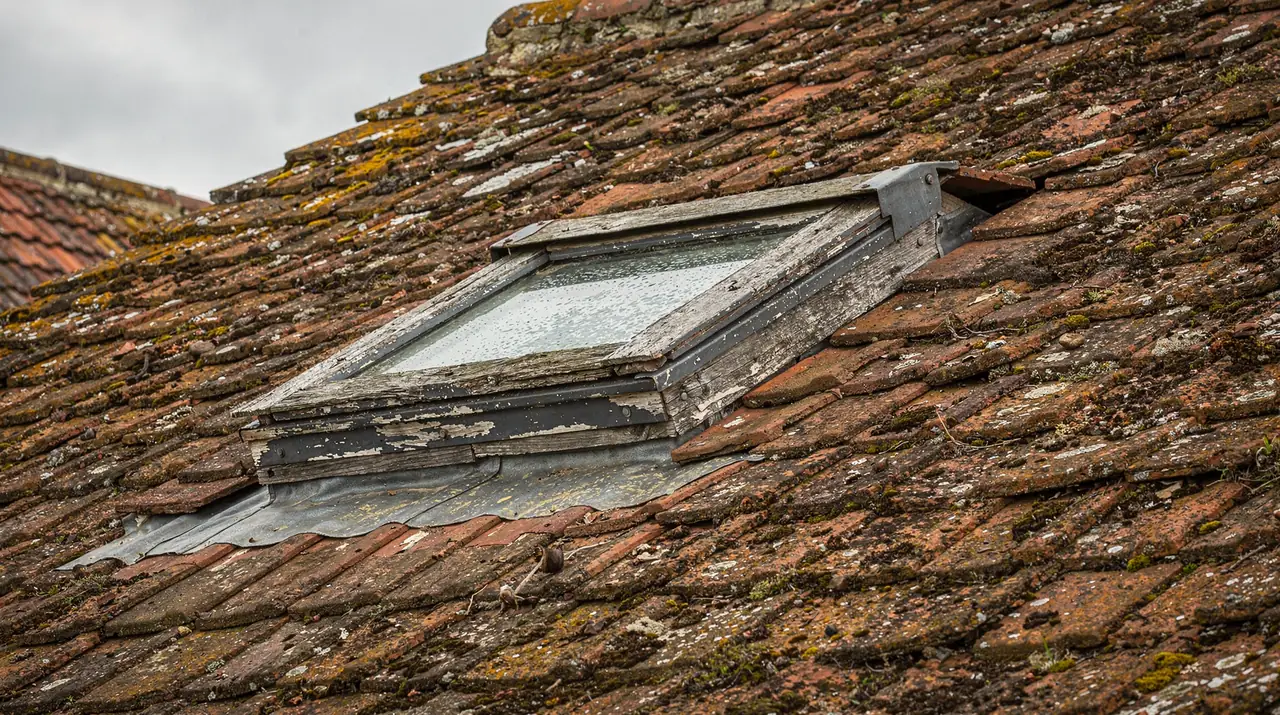
Where there are several rooflights of the same type in one roof, we measure each separately. Units that look identical can differ by a few millimetres, because they were fitted at different times or by different hands, and an order placed from one reading for all of them is the way a unit ends up too tight to seat or too loose to seal. Each unit is labelled on the sheet by room, so the right pane goes to the right opening on the day.
Reading the markings
Many sealed units carry a mark on the spacer: the maker, a date code and sometimes the glass makeup. These help to match the replacement, but they are only a guide. If the stamp is unreadable we measure the glass and take its thickness with callipers where the edge is exposed. Where the unit is laminated on the inside, which is common on rooflights because the inner pane has to hold together if it breaks, the replacement must be laminated in the same way.
Checking the roof around it
Before ordering, we also look at the roof around the rooflight: the flashing, the tile or slate courses, and the lining inside. If the flashing needs renewing it is better done with the new glass than a few years later, and we note it on the sheet. The same applies to flat rooflights: the height of the upstand and the state of the kerb are checked before a new unit is ordered.
chapter 04 · glass, heat and light
1.4W/m²K
- new rooflight
- 2.2 W/m²K
- new roof window
- 1.4 W/m²K
- or WER band
- B
- value to read
- whole unit
Part L figures for new fittings in existing homes in England. The figure applies to the complete rooflight or roof window, not to the glass on its own.
Choosing the glazing for the new unit
A new unit is a chance to improve on the old one. The options are coatings, glass makeup and gas, and the figures on the quote are for the whole unit.
Old rooflight glass is often plain double glazing from before low-emissivity coatings were common. A modern replacement is built differently. A coating on one pane reduces the heat that passes through, a warm edge spacer cuts the cold bridge at the rim, and the gap is filled with argon or a similar gas. Together they lower the heat loss through the unit, which you notice as less chill on the ceiling in winter. The change in feel is most obvious in a rooflight that was glazed with a plain unit decades ago.
Heat gain needs thought too. A south-facing slope with a large pane can make a room hot in summer, and solar control glass reduces the amount of sun energy that comes through. It gives the glass a slight tint or reflectance, which the maker's samples and literature show. Self-cleaning coatings help on a pitched rooflight you cannot easily reach, and laminated inner panes are specified for safety, since the glass is overhead.
Reading the figures
The U-value on a quote should be for the complete unit, frame included, because a rooflight is rated as a whole. Part L sets 2.2 W/m²K for a new rooflight, and 1.4 W/m²K, or Window Energy Rating Band B, for a new roof window. When only the glass is replaced inside an existing frame, the frame is unchanged and the improvement comes from the glass alone. When the whole rooflight is replaced, the new unit has to reach the Part L figure. Our guide to rooflight U-values explains how the numbers are produced.
terms on a glazing quote
- Sealed unit
- Two or three panes joined by a spacer and an edge seal, with a gas or dry air in the gaps.
- Low-E coating
- A thin layer on one pane that reflects heat back into the room.
- Warm edge spacer
- A spacer bar made from a material that conducts less heat than aluminium.
- Laminated glass
- Two sheets bonded to a plastic interlayer, so a broken pane holds together.
- U-value
- How much heat passes through a square metre for each degree of difference. Lower is better.
- Window Energy Rating
- A letter band for a roof window, covering heat loss and sun gain, calculated by a method the Glass and Glazing Federation publishes.
Double or triple
Triple glazing improves the figure further but adds weight and thickness, and an old frame may not have a rebate deep enough for it. That is one more reason the unit thickness is measured first. In a whole-rooflight replacement the choice is open, and the comparison of double and triple glazed rooflights sets out when the extra pane earns its place. If the room is hot in summer and cold in winter, we can show both the glass and a blind option at the survey.
One more choice is the finish of the inner face. A laminated inner pane can carry an acoustic interlayer, which can soften the sound of rain on the glass in a loft bedroom. It adds a little thickness, so it is another reason the rebate depth is checked before the order goes in.
chapter 05 · planning and regulations
BCPCouncil
- new glass only
- not notifiable
- whole unit swapped
- notifiable
- bigger opening
- structural approval
- planning authority
- BCP Council
BCP Council runs both planning and local authority building control for Bournemouth. Where a house sits within the New Forest National Park, the National Park Authority handles planning.
Permissions for a replacement rooflight
Two separate routes apply: planning, which concerns how the roof looks from outside, and Building Regulations, which concern how the work is done.
Replacing the sealed glass inside an existing rooflight frame is not a notifiable job under the Building Regulations, because no controlled fitting is being replaced. The frame stays, the roof stays, and the new unit goes into the opening that holds the old one. There is nothing to notify, and nothing changes outside, so planning does not come into it either.
Replacing the whole rooflight or roof window, frame and glass together, is different. The rooflight is a controlled fitting, so the work is notifiable, and the unit you fit must reach the Part L limit for its type. We make the Building Control notification, either to BCP Council or to a registered building control approver, and the certificate is handed over with your paperwork. Our answer on whether rooflight replacement needs Building Control goes through the cases, and the Building Regulations guide sets out the wider rules for rooflights.
Planning for a like-for-like swap
A replacement that sits in the same opening, in the same plane of the roof and at the same size, does not materially change how the house looks, and works of that kind are generally not development needing planning permission. Even so, the answer depends on the house. A flat or maisonette, a listed building, or a property whose permitted development has been withdrawn needs the position checked first. The planning guide explains how to check your own property, and we can look at it with you at the survey.
Glass unit only
- Frame and flashing stay in the roof
- No Building Regulations notification
- No change to the roof from outside
- Part L figure applies only to a whole new unit
Whole rooflight
- Frame, glass and flashing replaced
- Notifiable as a controlled fitting
- New unit must reach the Part L figure
- Certificate issued after the work
Changes that bring the structure into it
Making the opening larger means cutting and trimming rafters. That structural alteration needs Building Regulations approval, applied for before any rafter is touched. Moving a rooflight to a different place in the roof is the same case. If you are leaning that way, the survey is the point to say so, because a structural engineer's calculation may be needed and it affects the order of work.
Rooflights in a listed building, or in a conservation area where the council has restricted alterations, are a separate case. A like-for-like glass swap inside an unchanged frame is the quietest kind of work, but a listed building needs consent for changes that affect its character, and works without it are an offence. Ask us to check the position at the survey, or look at the council's planning register for your address before you book.
chapter 06 · fitting and making good
3stages
- outside
- glass or frame out
- the new unit
- set, packed, sealed
- inside
- lining and finish
A glass-only job is shorter than a whole-rooflight job. The survey tells you which one you have and how long it will take.
Fitting day and what is left tidy afterwards
Glass goes in from outside, a whole rooflight involves the roof covering, and both end with the room finished and the paperwork done.
A glass-only job starts with access. A pitched rooflight is reached from a roof ladder or a scaffold tower, and a rooflight over a stair or a high room may need the tower. The beading is lifted, the old unit is taken out and lowered or carried away, and the rebate is cleaned and inspected. The new unit sits on fresh packers so its weight is carried at the right points, then the beading and seals are refitted and the glass is cleaned. The room below is protected throughout with sheets.
A whole-rooflight job goes further. The roof covering is lifted back round the opening, the old frame and flashing come off, and the new frame is fixed to the rafters or the trimmers. The new flashing kit is laid to suit the roof covering, tile, slate or otherwise, and the covering is dressed back over it. Lifting the covering means the job is planned around the weather, and the roof is closed in before the end of the visit.

how the work runs
- Access and protectionLadder or tower in place, the room below sheeted and furniture covered.
- Old glass or frame outBeading lifted and the unit removed, or the frame and flashing taken off with the covering.
- New unit set and sealedPackers, beading and seals, or the new frame, flashing and covering dressed to it.
- Inside made goodLining, reveal and any blind fitted, then the glass cleaned and the area left tidy.
Making good inside
Waste is taken away with us. Old sealed units are heavy and the edges are sharp, so they are wrapped and carried down rather than dropped, and the roof and garden are checked for glass before we leave. If the covering was lifted, we check the new flashing against the roof from inside with the room light off, looking for any daylight at the edges.
The lining round the opening is part of the job. A glass-only swap leaves it alone. A whole new rooflight may leave a visible gap or a slightly different shaft size, in which case the plasterboard or lining is made good and the reveal finished ready for paint. Where a blind or a pole is fitted, it is set on the new frame.
Timing and what you need to do
Our guide on how long rooflight replacement takes gives the usual length of each route, and the survey guide explains what we do before any date is set. On the day, you need to clear the space below and make sure we can reach the room. We tell you the arrival time and what to move when the date is agreed.
faq
misted rooflight questions
Can a misted rooflight be cleaned?
Fog between the panes cannot be wiped away because it is inside the sealed unit. The only cure for the haze is a new sealed unit, and the survey confirms whether the frame is fit to take one.
How do I know if I need new glass or a new rooflight?
A firm, square frame with sound flashing points to new glass. A soft, twisted or corroded frame points to a whole unit. We check both on the roof and write the finding on your sheet.
Will new glass look any different from outside?
A modern coated unit can have a very slight tint or reflectance in some lights. The maker's samples show the effect, and the glass is named on the quote before anything is ordered.
Does a misted rooflight let more heat out?
A failed unit may have lost much of its insulating gas, so it can pass more heat than it did when new. A replacement with a low-emissivity coating and warm edge spacer reduces that.
Can the new unit be a different size from the old one?
New glass has to match the opening of the frame. A different size means a new frame and altered rafters, which is the whole-rooflight route.
Can you replace a VELUX that has misted?
Yes. Some branded roof windows can take a replacement pane or sash, and otherwise the whole window is swapped. See our page on replacing an old VELUX window.