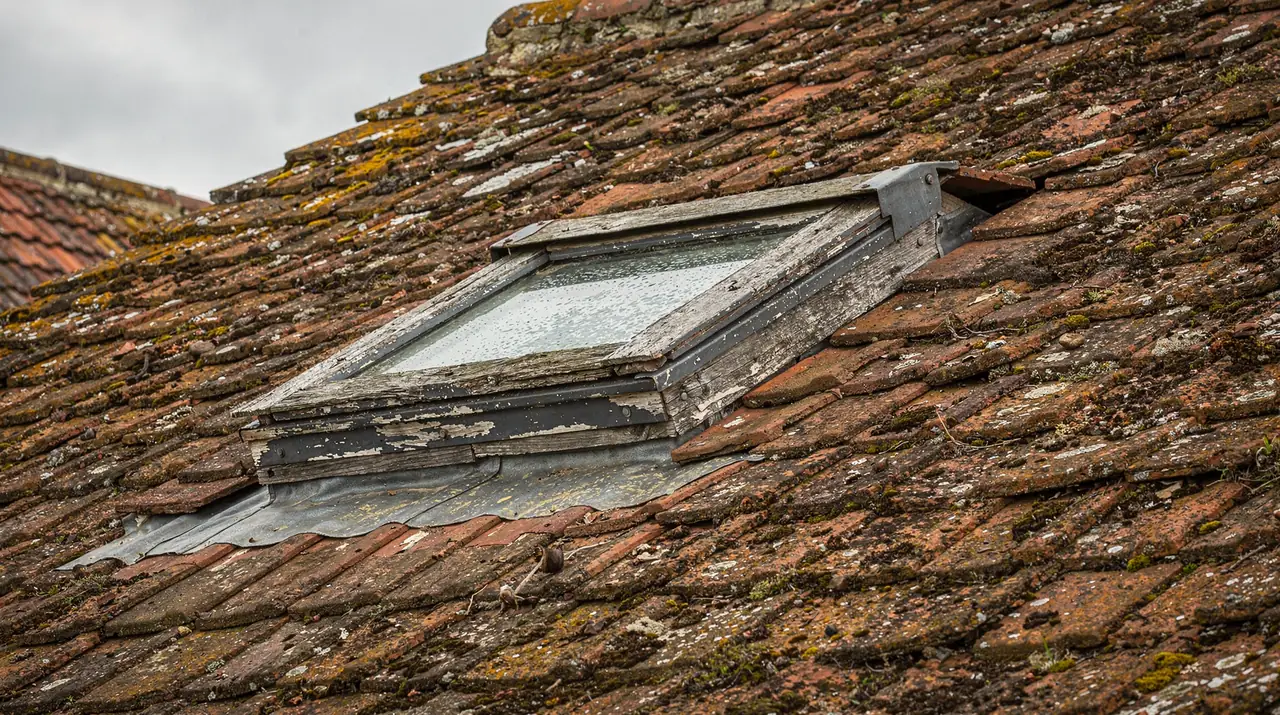
A roof window has a long working life, and many still in use were fitted decades ago. Over that time the timber frame ages, the seals harden, the hinges and the opening mechanism wear, and older double glazing falls well short of the Part L figure a new roof window must meet. Sooner or later the choice is between keeping the old window going and putting a new one in.
When the answer is a new window, the job is smaller than most people expect. The opening in the roof already exists, so the structure stays as it is. The old window comes out, a new frame of the same size goes in, new flashing is fitted around it, and the lining inside is renewed or refinished.
Each stage has choices in it, and a few of them affect the cost, the time and the paperwork. They are taken in order below, starting with the question of whether the whole unit needs to go at all.
Whole window or just the glass
Replacing a VELUX window can mean two different jobs. One swaps only the sealed glazing and leaves the frame alone. The other is a new window, frame and glass together. They suit different situations, and the choice depends on the state of the frame.
A glazing swap makes sense when the frame and sash are sound and the problem is the glazing, such as a pane that has misted between its layers. The frame is kept and the glazing is exchanged for a new unit made for that sash, where the maker still supplies one. The comparison of that route with a whole new unit is in the comparison of a glazing swap and a full replacement.
A whole new window is the better route when the timber is tired, the mechanism has worn, the finish has failed, or the window is old enough that its energy performance falls well short of what is available now. It also lets you change the opening style or the glazing at the same time, which a glass swap cannot do.
| Condition of the existing window | Usual route |
|---|---|
| Sound frame, failed glazing | New sealed glass unit |
| Worn hinges or mechanism, timber still sound | Whole window, or a new sash assembly where the maker offers one |
| Timber softening or finish failing | Whole window |
| Wish to change opening style or glazing | Whole window |
The survey looks at the frame, the sash and the seals before the choice is made. If the glass unit alone will do, we say so in the quote.
Reading what is already in the roof
Replacing a window begins with finding out exactly what is there. Three pieces of information are needed: the size, the type of window and the roof covering around it.
The size is the code on the label, and the way to read and check it is covered in the guide to VELUX size codes. On a VELUX window, lift the ventilation flap along the top of the sash and the type sign is in its right-hand corner. If it has gone, the frame is measured across and up the slope and matched to the current range.
The type means how the window opens and how it is built. Centre-pivot windows turn about a bar across the middle of the sash. Top-hung windows swing out from the top edge. Some have a handle at the top and some at the bottom. Knowing this lets us fit a new unit that opens in the same way, or choose a different one if you want a change. The answer on centre-pivot and top-hung windows shows how the two differ in use.
The covering is the roof material the flashing must seal against: plain or interlocking tiles, slate or a profiled sheet. Each needs a different flashing kit, and the covering around an older window may have changed since the window was fitted, for example if the roof has been recovered. The covering is checked on the roof, not assumed from the house.
Those three pieces go onto the survey sheet, along with the pitch of the slope and the position of the window relative to the rafters and the ridge. They are the basis of the written quote.
Matching the size or changing it
The easiest replacement is like for like. A new window with the same size code as the old one fits the same opening. Nothing in the roof structure changes, no rafters are cut, and the work is confined to the frame, the flashing and the lining.
Sometimes there is a reason to change. An old window may be smaller than the room deserves. It may be a size that the maker no longer lists. Or the roof may have changed around it, with new insulation that deepens the build-up.
VELUX states that its current roof windows fit into existing roof openings with no structural work, which covers its own older windows on a replacement. Where an old opening does not match a current code, the opening is adjusted: a slightly smaller frame needs new timber packed into the opening so the frame can be fixed, and a larger frame needs the opening enlarged, which is a structural alteration. The limits are laid out in the answer on enlarging a VELUX opening.
- Same code: the existing opening is reused and no timbers are cut
- Smaller frame: the opening is packed down with new timber to suit the frame
- Taller frame: the trimmers above or below are moved; wider frame: a rafter is cut and trimmed, with Building Regulations approval
- Different opening style at the same size: normally possible in the same opening
Which of these applies is settled at the survey, once the opening and the rafters have been measured.
The flashing, and why it is renewed
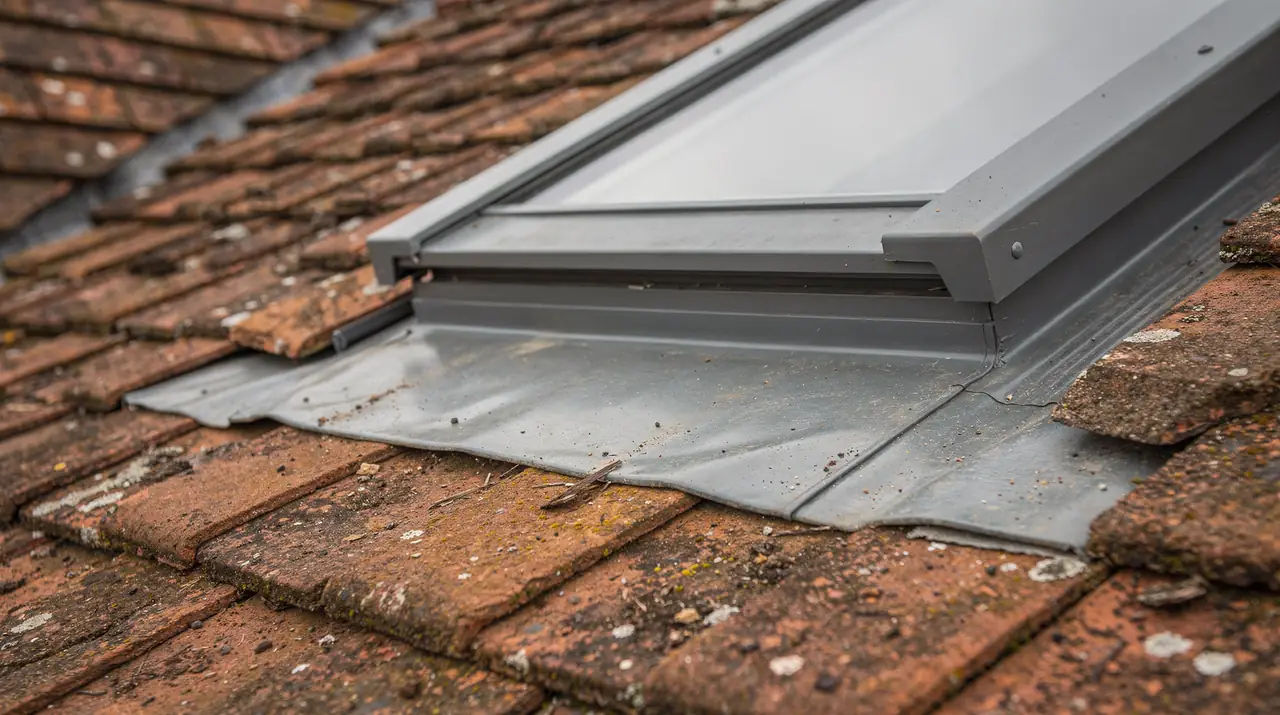
The flashing is the set of formed metal pieces that closes the gap between the window frame and the roof covering. It is cut and folded to the covering, and it is made to fit one size of frame. When a window is replaced, the old flashing comes out with it.
Reusing old flashing with a new frame is not a good plan. Metal that has been in place for years has been bent and folded around the old frame, and it will not sit properly against a new one. A flashing kit is designed for the new window and fitted with it, so the two are installed together as a unit.
The covering around the window is lifted to fit the flashing, and then relaid. Tiles or slates that have to be cut are marked and replaced in the same pattern. A roof that has aged will sometimes show cracked or loose pieces around the window while the covering is lifted, and any found are pointed out to you while the covering is open.
Choosing the right kit for the covering is the subject of the answer on VELUX flashing kits. Getting that choice right is what keeps the new window sealed to the roof, and it is one of the items we write on the survey sheet before ordering.
Inside the room
The inside of a roof window has its own parts: the lining, the sill and the finish around the opening. In an older installation the lining is often plain plasterboard, set square to the frame, or a plastered splay. When the window comes out, the lining goes with it, or at least has to be opened up to take the new frame.
A new lining can be shaped to bring more light into the room. A splay that opens out from the frame towards the ceiling and the wall spreads the daylight further than a square reveal does. Where an old window has a square reveal, replacement is the time to improve it if the room allows.
Plaster and paint around the lining are made good at the end of the job. Furniture near the opening needs moving clear beforehand, and the floor below needs covering. A room with a built-in wardrobe, a bed head or a shower near the opening is noted at the survey so that the plan for the work inside is settled in advance.
Blinds are the other interior item. Blinds are made for a particular frame size, and current VELUX blinds click onto brackets pre-fitted in the window. A blind from the old window may fit the new one if the size matches and the fixings are compatible, and if not, a new blind is ordered with the window. The question of fitting them together is answered in the answer on blinds at installation.
Regulations, glazing performance and access
Replacing a whole roof window is notifiable to Building Control as a controlled fitting. The new window must meet the standard set for existing homes: a roof window has to reach 1.4 W/m²K, or else Window Energy Rating Band B. The maker's data gives the value for each model and glazing option, so the unit on the quote can be checked against that figure. A glazing-only swap inside a retained frame is outside that notification.
If the new window is the same size as the old, no structural alteration is involved. If it is larger, cutting the rafters is a structural change that needs approval. In both cases the work goes through building control: BCP Council's service in Bournemouth, Christchurch and Poole, the local council's service elsewhere, or a registered building control approver. Keep the completion paperwork with the house deeds, since a buyer's solicitor may ask for it. The full position is set out in the guide to rooflights and Building Regulations.
Planning is rarely an issue for a like-for-like swap, since the unit stays in the same place and stands at about the same height above the slope. A larger unit, a change of position or a listed building changes that, and the checks are explained in the rooflight planning guide.
On access, VELUX says most of its replacement jobs can be done from within the house, the fitter leaning out through the empty frame. A large window or a roof that cannot be reached that way needs a tower or a roof ladder, as the answer on fitting a roof window from inside describes. VELUX gives about four hours for most replacements, and a single window is typically a matter of a day or less, and the answer on fitting time gives the factors that move it.
The work carries our 10-year workmanship guarantee, which is described on the guarantee page along with what it covers.
How a replacement runs
The order of work is the same from job to job, with small changes for the roof covering and the window type.
- Survey. The code, the type, the covering, the pitch and the rafter positions are measured and written on the sheet. You receive it with the quote.
- Order. The window, the flashing kit and any blind are ordered to the codes on the sheet.
- Strip. The sash and the frame are removed and the covering around the opening is lifted.
- Fit. The new frame is fixed, the flashing is built up around it and the covering is relaid.
- Finish. The lining and the surrounding plaster are made good, and the room is cleared.
Before the fitters leave, ask to see the sash opened, closed and turned to its cleaning position, and where the ventilation flap and the type sign are. Check too that the quote says the old window goes away with the waste.
faq
replacing a VELUX window
Can I replace a very old VELUX with a modern one in the same opening?
Usually yes. VELUX states its current windows fit existing openings; where an old opening does not match a current code, the nearest size is chosen and the opening is adjusted with timber.
Does a replacement window need to be the same type as the old one?
No. A centre-pivot can be swapped for a top-hung model of the same size, though the position of the handle and the way the sash swings change the use of the room.
Will replacing the window mean redecorating the room?
The plaster and paint immediately around the opening are made good as part of the job. A new lining sometimes changes the shape of the reveal, and fresh decoration on that area is usually needed.
Do I need to be in the house while the window is replaced?
Someone needs to let the fitters in and to be reachable, and the room is cleared before work starts. You do not have to stay in the room.