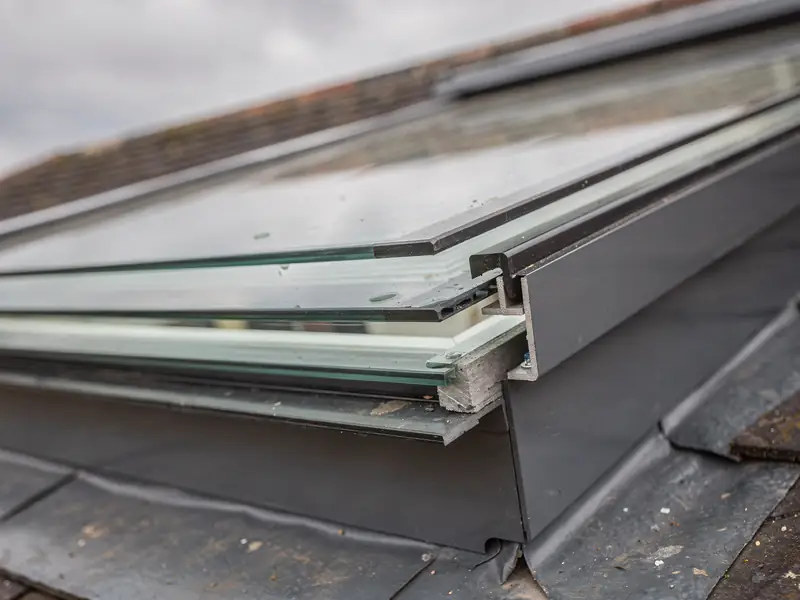
Many rooflights sold in Britain are double glazed: two panes with a sealed gap between them, usually a low-emissivity coating on one pane and a gas fill in the gap. Triple glazing adds a third pane and a second gap. On paper that means less heat passing through the unit. On the roof it also means a heavier sash, a deeper frame, a slightly darker view of the sky and a different set of limits on which models can take it.
The choice looks like a simple upgrade, but it is really a match between a glazing build-up and a particular opening: its size, its slope, the room underneath and the way it needs to open. A small fixed rooflight over a landing and a large opening roof window in a loft bedroom want different answers.
The sections ahead cover what each build-up is made of, how the thermal figures compare, where the extra pane costs you something, and how to match the glazing to the room. The wider subject of efficiency, including the wall-to-roof picture, sits on the energy efficient rooflights page.
What is actually in a double and a triple unit
A sealed glazing unit is a sandwich. The panes are held apart by a spacer bar around the edge, the gap between them is filled with a gas that conducts heat poorly (argon is the common choice), and the whole edge is sealed so moisture cannot get in. A microscopically thin coating of metal or metal oxide on one glass surface, called a low-emissivity or low-E coating, reflects heat back towards the room.
A double unit has two panes and one gap. A triple unit has three panes and two gaps, with a low-E coating on one or two of the surfaces. The spacer on a good unit is a warm-edge type made of a material that conducts less heat than aluminium, because the edge of the unit is the coldest part of the glass.
Rooflights are overhead glazing, so the inner pane is normally laminated or toughened for safety. The glass build-up therefore has more variation than a vertical window: the outer pane may be toughened for hail and impact, the inner pane laminated so that a broken pane stays in the frame. That specification varies by maker and by model, and the survey sheet records exactly which unit is being quoted.
| Feature | Double glazed | Triple glazed |
|---|---|---|
| Panes | Two | Three |
| Sealed gaps | One | Two |
| Overall unit thickness | Slimmer | Deeper |
| Weight on the sash or kerb | Lighter | Heavier |
| Light through the unit | Higher | Slightly lower |
Every row in that table comes back later in the guide, because each one changes what the unit does on your roof.
Heat loss and the figures you will see
Thermal performance is given as a U-value, measured per square metre of unit for each degree of temperature difference (W/m²K). The lower the figure, the less heat passes through the unit. Triple glazing lowers it because the extra pane and gap add another layer of resistance.
Part L sets two bars for existing homes in England. Rooflights have to reach 2.2 W/m²K. Roof windows get a tighter target, 1.4 W/m²K, with Window Energy Rating Band B accepted as the alternative. Double glazed units with a low-E coating and a gas fill are made to meet the roof window figure in many ranges, and triple glazed versions of the same range come in lower again. The only reliable answer for a named product is the figure printed on the maker's datasheet, so we quote from that and not from a general rule about pane counts.
Two readings are easy to confuse. The centre-pane value describes the glass alone, away from the edges. The whole-unit value includes the frame, the spacer and the edge of the glass, which is what Building Regulations care about. A triple glazed unit with a thin, poorly insulated frame can give a whole-unit figure that is closer to a good double unit than the centre-pane number suggests. When two quotes are compared, they have to quote the same kind of figure. The full set of terms is explained in our U-value guide, and the figure each class of unit must reach is covered in the answer on required U-values.
There is also the matter of what a lower figure buys. A rooflight is a small part of a roof, so changing from double to triple glazing changes the heat loss of the whole house by a small amount. Where the old unit was single glazed, or a failed double unit, the step up to any modern sealed unit is the big one. The step from a good double unit to a triple unit is a smaller gain on top of that. The answer on heat loss puts the replacement case in plain terms.
A double unit with a low-E coating and a gas fill can meet the 2.2 W/m²K that Part L sets for a rooflight.
What the third pane costs you
Every extra layer has a price in something other than money. On a roof there are four to weigh.
Weight
Glass is heavy, and a pane in a rooflight can be thicker than in a wall window because of the safety specification. A third pane adds that weight to every sash. On a fixed unit the kerb or frame carries it without difficulty. On an opening roof window the sash hangs from hinges or a pivot and is held open by a stay, a spring or an actuator, and each of those is rated for a range of weights. A triple sash may need a different hinge or counterbalance from the double sash of the same size, and some models are not offered in triple at all.
Depth
The unit is thicker, so the frame is deeper. On a flat roof lantern or rooflight this matters for the kerb: the upstand has to be set to suit the unit, and a deeper frame can raise the overall height above the roof. That height is one of the figures checked against the permitted development limit on projection, which the planning guide explains. On a pitched roof the unit sits in the thickness of the roof, and a deeper frame has to fit between the rafters and the roof covering without leaving a gap in the insulation.
Light
Each pane and coating absorbs and reflects a little light. A triple unit lets through slightly less daylight than a double unit of the same size, and the glass can look a shade darker or greener when you look at it edge-on. In a bright south-facing room the difference is hard to notice. In a north-facing landing with one small rooflight, the extra light of the double unit is worth having.
Solar heat
The same effect cuts solar gain. A triple unit lets in a little less of the sun's heat in summer, which helps a top-floor room, but it also takes a little less in winter. Solar gain is a separate property from the U-value, and glass can be specified to cut it further. The answer on solar control glass covers that choice.
Comfort: draughts, cold glass and condensation
People who ask about triple glazing are often reacting to something they can feel: a cold downdraught from a rooflight over a landing, a chill near a loft bedroom window, or condensation running down a sloping pane. Glass colder than the room cools the air next to it, and that air sinks. A unit with a lower U-value has an inner surface closer to room temperature, so the effect is weaker.
That also helps with condensation on the room side of the glass. Condensation forms when warm, damp air meets a surface cold enough to bring it to dew point. Warmer inner glass makes that less likely, though the amount of moisture in the room still matters, and a bathroom or a kitchen will produce misting on any glass in some conditions. An opening rooflight helps by letting that moist air out. Our answer on condensation looks at the causes in more detail.
There is a difference between condensation on the inside face and moisture between the panes. Water vapour inside the sealed gap means the seal has failed, and no number of panes will cure it. That fault belongs to a different page: why a rooflight mists between the panes.
Noise is the other comfort question. Rain on a roof window can be heard in a room directly under it, particularly in a loft conversion with no ceiling between the window and the occupant. Sound reduction depends on the thickness of the panes and whether one is laminated, and on the width of the gap, more than on how many panes there are. Laminated glass and thicker panes reduce noise, so a triple unit is not automatically the quieter choice. If noise matters, ask the maker for the glass specification and not just the pane count.
Matching the glazing to the room
The right build-up depends on the opening and the room underneath. These are common situations, with the direction the glazing choice tends to point.
| Situation | Leans towards |
|---|---|
| Loft bedroom or study, roof window, heated all year | Triple, if the model offers it with the opening gear you want |
| Small fixed rooflight over a landing or hall | Double, to keep the daylight |
| Large flat rooflight over a kitchen extension | Triple or double with solar control, depending on the aspect |
| Roof lantern on a living space | Double with a low-E coating or triple, quoted for the whole lantern |
| Conservation-style rooflight | Check what the model is made in first |
The last row exists because some rooflight designs, especially the slimline conservation types, are built around a thin glazing unit and cannot take a deeper one without changing how they look. The reasons and the options are covered in the answer on double glazing a conservation rooflight.
Flat rooflights and lanterns have their own variety of glazing, including polycarbonate and glass options, and the range is set out in flat rooflight glazing options.
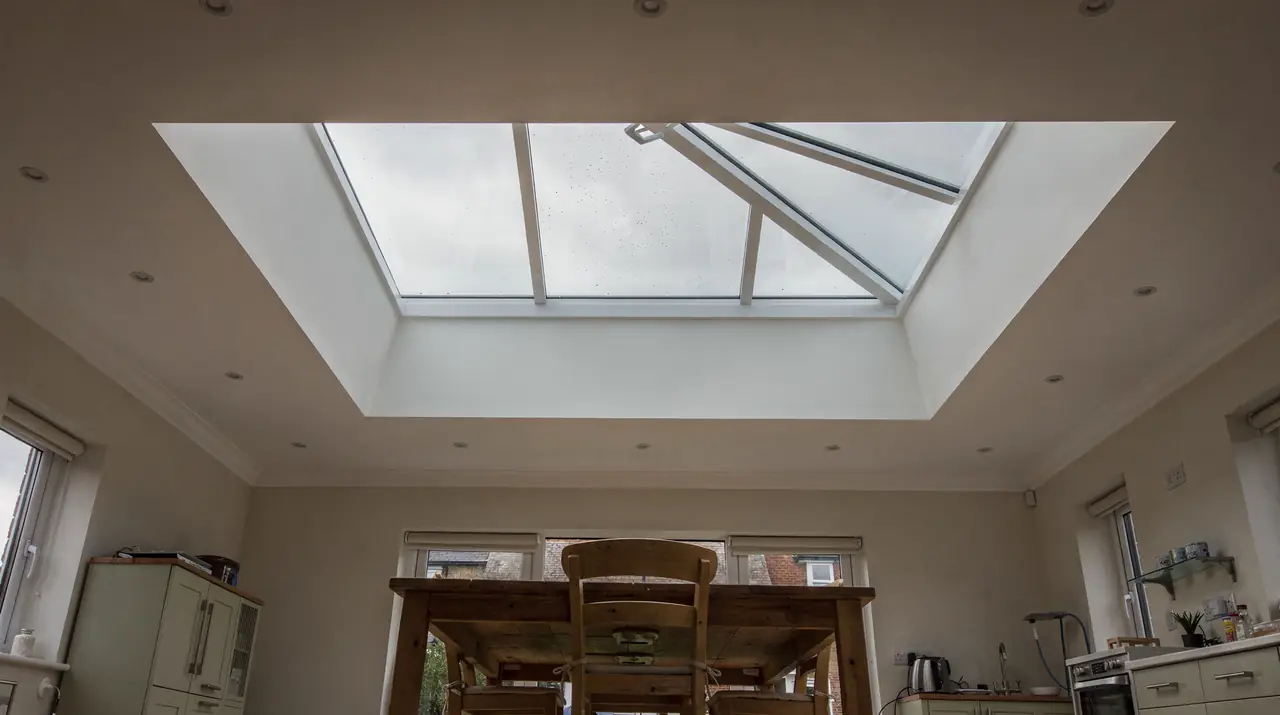
Aspect matters as much as pane count. A south or west facing rooflight over a living space takes a lot of sun, and a coating that reduces solar gain can matter more than a third pane. A north facing rooflight gets little direct sun, so the thermal figure and the amount of daylight matter more than any solar control.
How we compare the options for your roof
We do not choose by pane count. At the survey we measure the opening, record the pitch and rafter centres, and note the room below it, its use and whether it is heated. Those readings are written on the survey sheet you keep, and the glazing options are priced against them.
For each rooflight we work through the same questions in order.
- Does the model you want come in double and triple, and is the triple sash within the rating of its hinges or actuator?
- What does the maker's datasheet give for the whole-unit U-value of each, and does it meet the Part L figure for that class of unit?
- Does the deeper unit still fit the kerb height or rafter depth, and does it stay within the planning projection limit?
- What does the room need: more light, less summer heat, less noise or less cold glass?
If both builds meet the regulation figure, the choice comes down to the room and to how much you want to spend. You will see each option quoted separately with the datasheet figure beside it, so the comparison is open to check. Replacing a whole rooflight is notifiable to Building Control, and the glazing figure is one of the things that notification confirms. The wider rules are in rooflights and Building Regulations.
What happens at the visit itself is explained in the rooflight survey answer.
Triple glazing where it pays for itself, and where it does not
A triple glazed rooflight makes sense in a room you heat for long hours, with a large opening, where the glass is the coldest surface in the room. It also makes sense where you are building to a higher energy standard than the minimum, where a lower whole-unit figure helps the overall calculation. A new loft conversion or a well-insulated extension are the usual examples, and a large lantern on a kitchen extension is another.
Double glazing is the better answer where the opening is small, where daylight is short, where the model you want only comes in double, or where the weight of a triple sash would force a change to the opening gear. A good double unit with a low-E coating and gas fill clears the Part L figure for rooflights, and many ranges clear the roof window figure as well, so there is no regulatory need to move up.
Some buyers choose triple glazing because the label sounds better. That is fine, but the cost is worth setting against what changes in the room: a small gain in warmth, a small loss in light and a heavier sash. If the roof window you were quoted is double, ask for the triple version of the same model with its datasheet, and compare the two figures before paying the difference.
If you are unsure, the easiest check is to have us quote both on the same measured survey sheet. The costs are laid out in general terms on the costs page, and the survey records the measurements both options rest on.
faq
glazing questions answered
Is a triple glazed rooflight better than a double glazed skylight?
It loses less heat, but it also weighs more and lets in a little less light. For a small unit or a bright room, a good double unit often serves just as well.
Can any rooflight be fitted with triple glazing?
No. Some models are only made in double, and others need a different hinge or actuator to carry a triple sash. The maker's range tells you which.
Does triple glazing stop my rooflight from misting between the panes?
No. Moisture inside the sealed gap comes from a failed seal, and a third pane does not change that. A new sealed unit, double or triple, replaces the failed one.
Do I need triple glazing to pass Building Regulations?
No. Part L allows a rooflight no more than 2.2 W/m²K and sets a roof window at 1.4 W/m²K or Band B, and a good double unit can reach them.