
A motorised rooflight left open on a warm morning is a pleasant thing until the weather turns. A rain sensor is the part that notices. It is a small detector that reacts to water on its surface and sends a signal that makes the motor close the sash. Fitted well, it closes a rooflight while you are at work, asleep or out for the day.
The idea is simple. The details are not, because the same sensor can be placed well or badly, wired to the motor in more than one way, and powered from more than one source. Those details are what decide whether a sash shuts before the sill is wet.
The sections run through what the sensor senses, where it goes, how it talks to the motor, what powers it, what it cannot do and how it is tested at handover. It belongs to the larger job described on our electric and opening rooflight installation page, and everything below is about the sensor alone.
What a rooflight rain sensor detects
A rain sensor reacts to rain arriving, and makers do this in different ways. VELUX states that the sensor on its solar roof windows reacts to the vibration of raindrops, while on its electric model moisture triggers the closing. Other makers use a small surface whose electrical behaviour changes when wet, and some warm that surface slightly so that dew or frost dries off and does not keep the sash shut for hours. Whether a given sensor is warmed, and how sensitive it is, differs by maker and model, and the data sheet states it.
The sensor reports one thing: there is water on me now. It does not forecast, it does not measure how hard it is raining and it does not know whether you want the rooflight open for a reason. It is a switch that responds to wet.
Once the surface dries, most sensors allow the control to accept an open command again. Some systems reopen the sash on their own when the rain stops, and others stay shut until a person opens them. The choice is made when the system is set up, and it is worth settling before it is fitted, since a sash that reopens by itself in the dark may not be what the household wants.
A rain sensor reacts to rain that has already arrived, so some drops land before the sash finishes closing.
Where the sensor goes
Position is the first thing to get right with a separate sensor. It has to be wetted by the same rain that would wet the open rooflight, and it must not be wetted by anything else.
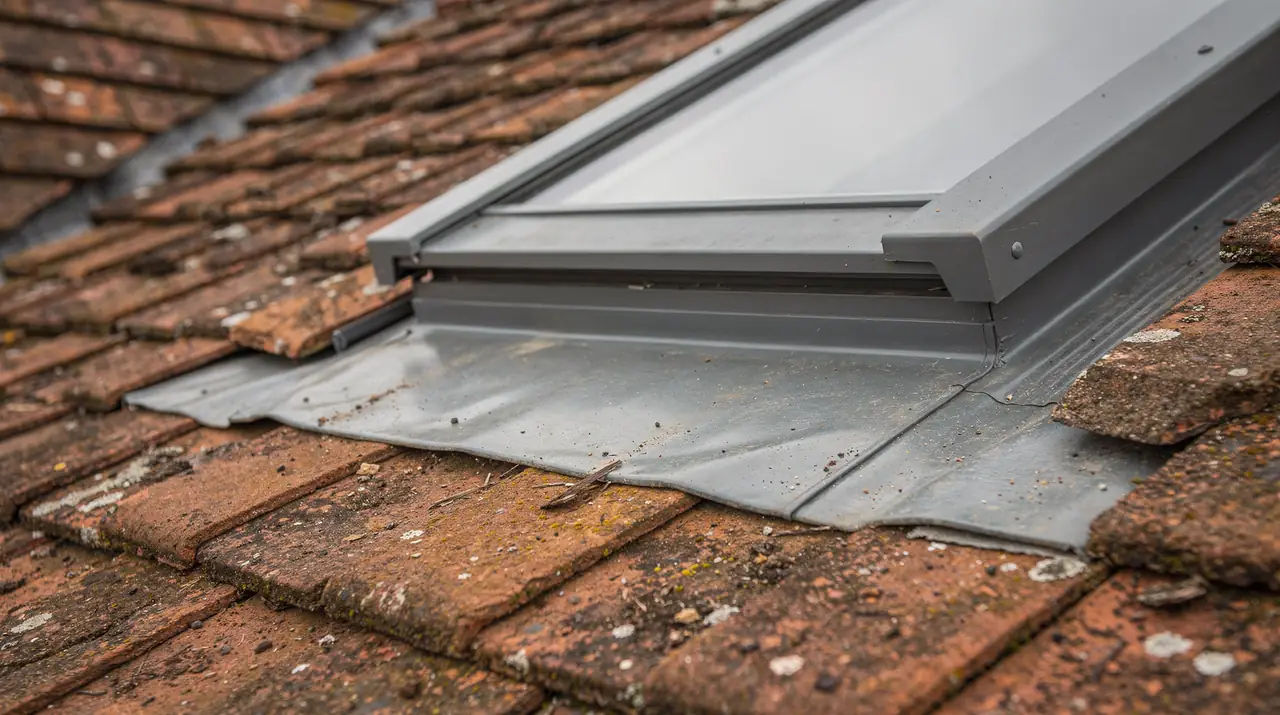
On electric roof windows the sensor is commonly built into the window itself; VELUX describes an integrated rain sensor on its solar and electric models, so it sits on the slope with the window and gets the same rain. On flat rooflights the sensor is commonly a separate small unit set on the roof or on the kerb, with a cable back to the control. The right place depends on the model, and the maker's fixing instructions are followed.
Placement checks made on the roof at the survey include:
- Whether anything above the sensor, such as an overhanging eave, a chimney or a parapet, would shelter it while rain still reaches the open sash
- Whether water from a gutter, a downpipe or a roof above could drip onto it when no rain is falling on the sash
- Which way the wind drives rain on this slope, since rain that falls at an angle can wet the sensor and miss a sheltered rooflight, or the other way round
- Where the cable can run, and whether it can pass the flashing or the kerb without being pinched
- Whether the sensor can be reached later for cleaning
A sensor tucked under a tile lip or sheltered by a neighbouring dormer reads dry in a shower that soaks the open sash. A sensor under a drip from a tile edge reads wet after the rain has stopped and holds the sash shut. Both faults come from position, and both are avoided by looking at the roof.
How the sensor tells the motor to close
The sensor does not move the sash. It sends a signal to the controller, and the controller drives the motor. The common arrangements differ in how that signal travels.
| Arrangement | How it works | What to know |
|---|---|---|
| Wired to the controller | A cable carries the signal from the sensor to the control unit | Reliable signal; needs a cable route through the roof edge or kerb |
| Radio link | The sensor transmits to the control | No cable through the weathering; relies on the battery and on radio range |
| Built into the system | Sensor and motor supplied as one kit from the same maker | Settings and wiring are matched; parts come from one source |
In every arrangement the rain signal has priority over a command to open. When the sensor reads wet, an open command from the wall switch or remote is normally refused, or the sash closes again at once. How the system behaves is a function of the controller, which is why a sensor is ordered with a controller that supports it. Whether a sensor can be added later depends on the controller and on what the maker lists for it.
The signal also tells the motor which direction to go and where to stop. The travel limits on the actuator are set when the unit is fitted, so the sash shuts fully and seals against its gasket and does not stop a few millimetres short. Closing a sash into its seal is the end of the motor's travel, and it is tested at handover.
The pair of choices, wired against radio and mains against battery, is covered with the other controls in our comparison of electric and manual opening rooflights.
Power for the sensor and the motor
A sensor that is dead is the same as no sensor. It must have power at the moment it rains, which may be weeks after anyone last touched it.
A wired sensor is usually fed from the controller, which draws on the same supply as the motor. A radio sensor needs its own power: a battery, a small solar cell, or both. Battery life is stated by the maker and varies with how often the sensor transmits. A sensor with a battery will eventually need the battery replaced, and the sensor should be placed where a person can get to it for that.
The supply to the motor has the same duty. If the mains is switched off, or the transformer is unplugged, or a solar panel is shaded for a week, a motor may not close the sash when asked. That is the weak point of any system that relies on a sensor, and it is why a power failure and a weather change at the same time are worth thinking about.
Some actuators can be closed by hand or by a spare battery when the supply fails. Others cannot. Ask which applies to the model you are quoted. How a motor is wired and who connects it is covered in our answer about electricians and electric rooflights, and the solar route is set out in the answer on running an electric rooflight on solar.
What a rain sensor cannot do
A rain sensor is a convenience. It makes it less likely that a sash is left open in a shower. It is not a promise that the sash will never be open when it rains.
- It cannot act before the first drops land, so some rain can enter while the sash travels shut.
- It cannot cope with wind-driven rain that skirts the sensor, or with rain that falls straight down on a sheltered sensor but blows into the open sash from the side.
- It cannot work with a flat battery, a switched-off supply or a cable that has been cut.
- It cannot tell the difference between rain and water from a hose, a cleaner's bucket or snow melting off a nearby roof.
- It cannot close a sash that is blocked, for instance by a curtain, a plant or an item on the sill.
The practical answer is the one a household gives itself: close the sash by hand or by remote before leaving the house for the day if the sky looks unsettled. A sensor then deals with the surprise shower, and a person deals with the forecast.
Closing against an obstruction is a point of safety as well as damage. Actuators have limits on the force they apply, and the maker's instructions cover trapping risk. Keep the path of the sash clear of anything that could be caught.
Treat the sensor as cover for a surprise shower, and close the sash yourself when rain is forecast.
Getting the system installed and set up
The sensor is part of the order from the start, because the controller and the motor have to be chosen to work with it. The survey sheet records the sensor type and where it will sit.
On the roof the order of work is the frame and flashing first, then the sensor in its position with its cable routed, and then the motor and control inside. A cable that has to go through a flashing is sealed where it passes, because a sensor cable is a path for water as well as a signal.
Inside, the controller is wired or paired to the sensor, the travel limits on the motor are set, and the sash is run through its full travel. If a remote is part of the order, it is paired to the controller at this stage, and the household is shown which command overrides which.
A new opening in the roof needs Building Regulations approval, and replacing a whole unit is notifiable. The sensor does not change either position. The planning side is set out in the rooflight planning guide.
A water test at handover
A sensor that has never seen water has not been tested. A sound handover opens the sash and wets the sensor with a small amount of clean water, applied the way rain would land on it. The sash should start to close within moments and finish fully shut. The test is then repeated once the sensor has dried, to confirm that the control accepts an open command again, or stays shut, whichever was agreed.
- Open the sash to a wide position from the wall switch or remote.
- Wet the sensing surface with a few drops of water.
- Watch the sash close and seat against its gasket.
- Try an open command while the sensor is still wet, and check that it is refused or that the sash closes again.
- Let the sensor dry and confirm the behaviour you asked for.
Write down the result with the sensor type, its position and what powers it, and keep it with the unit's paperwork: it tells whoever looks at the system later where the sensor is and how it should behave.
A check worth repeating each spring
Run the same wet test once a year. It is quick, and it confirms the battery, the cable and the motor are all still doing their jobs. If the sash does not respond, check the supply first and the maker's instructions second.
Where the sash will be left open for long periods, the opening position matters as well. Our guide to how far an opening rooflight opens explains the travel, so a sash left on a partial vent position can be judged against the rain you expect.
faq
sensor questions answered
Can a rain sensor be added to an electric rooflight that was fitted without one?
Only if the controller accepts a sensor and the maker lists one for that model. The VELUX motor kits for manual windows come with a rain sensor built in. Raise it at the survey either way.
Will a rain sensor close the rooflight in light drizzle?
It reacts when enough water lands on the sensing surface. Sensitivity differs between makes, so very fine drizzle or mist may take a little longer to register. The data sheet states the response.
Does a rain sensor work in frost or snow?
Some are warmed so that frost and dew clear, and some are not. Snow lying on a flat rooflight is a reason to close the sash by hand in any case.
Does the sensor need cleaning?
Leaves, bird droppings and dust on the sensing surface can mislead it. A wipe with a damp cloth when you clean the glass keeps it reading correctly.